
Close Menu
KnowYourNarc
    What's Hot
    Covert Narcissism

    How Covert Narcissists Quietly Win the Long Game

    Relationships

    Why Narcissistic Coworkers Feed Off Drama at Work Every Day

    Red Flags

    How to Identify Gaslighting in Daily Conversations Easily

    Subscribe to Updates

    Get The Latest News, Updates, And Amazing Offers

    Important Pages:
    • Home
    • About Us
    • Contact us
    • Privacy Policy
    • Terms & Conditions
    Facebook X (Twitter) Instagram Pinterest
    Facebook X (Twitter) Instagram Pinterest
    KnowYourNarc
    • Understanding Narcissism

      The Painful Dance: Golden Child vs Scapegoat in Narcissistic Families

      June 22, 2025

      Healthy Confidence vs. Narcissism: Key Differences Explained

      June 21, 2025

      How Social Media Fuels Narcissistic Behaviors Today

      June 20, 2025

      Overt vs. Covert Narcissists: Key Differences Explained

      June 19, 2025

      Narcissism in Men vs. Women: Exploring Key Differences

      June 18, 2025
    • Covert Narcissism

      Spotting Covert Narcissism at Work: Key Warning Signs

      August 18, 2025

      Breaking Free: True Tales of Escaping Covert Narc Abuse

      August 17, 2025

      The Subtle Allure of the Covert Narcissist Explained

      August 16, 2025

      Surviving Covert Narcissistic Abuse: True Stories of Hope

      July 1, 2025

      How Covert Narcissists Quietly Win Over Time: A Friendly Guide

      June 30, 2025
    • Communication

      Spotting Triangulation in Narcissistic Talk: A Friendly Guide

      July 2, 2025

      What Is Projection and Why Narcissists Rely on It

      July 1, 2025

      The Power of Narcissistic Rage in Verbal Attacks: Explained

      June 30, 2025

      Breaking Down Circular Conversations with Narcissists

      June 29, 2025

      Breaking the Cycle: Understanding Narcissistic Talk Patterns

      June 28, 2025
    • Parents & Family

      Breaking Free: Healing from Narcissistic Parental Control

      August 17, 2025

      Healing the Hidden Wounds of Narcissistic Family Neglect

      August 16, 2025

      Healing from Narcissistic Parents: Navigating Adult Love

      July 23, 2025

      Gaslighting from a Parent: Recognize It and Begin Healing

      July 22, 2025

      10 Signs You Grew Up with a Narcissistic Parent

      July 21, 2025
    • Friendships

      How Narcissistic Friends Isolate You Using Other People

      August 17, 2025

      Love-Bombing in Friendships: When Closeness Moves Too Fast

      July 2, 2025

      When You’re the Therapist, Not the Friend: Setting Boundaries

      July 1, 2025

      When Envy Hides: The Narcissist in Your Friendship

      June 30, 2025

      When You Outgrow a Narcissistic Friend: What to Expect

      June 29, 2025
    • Relationships

      Spotting Narcissistic Boss Manipulation: Protect Your Soul

      August 24, 2025

      How to Document Abuse from a Narcissistic Boss at Work

      August 23, 2025

      When Your Manager’s a Narcissist: Spot Signs + Survive

      August 22, 2025

      Healing Your Soul: Setting Boundaries with a Narcissistic Parent

      August 21, 2025

      How Narcissistic Moms Shape Daughters’ Fragile Self-Esteem

      August 20, 2025
    • Dating

      Rebuilding Self-Trust: Your Guide Before Dating Again

      January 15, 2026

      Why Taking a Break from Dating Can Be a Smart Power Move

      January 14, 2026

      What Safe and Healthy Love Actually Feels Like: A Guide

      January 13, 2026

      How to Express Your Needs Clearly Without Feeling Afraid

      January 12, 2026

      Breaking Free: How to Avoid Toxic Relationship Patterns

      January 11, 2026
    • NPD

      NPD vs. Healthy Self-Esteem: Key Differences Explained

      August 20, 2025

      Setting Boundaries with Someone Who Has Narcissistic Personality Disorder

      August 19, 2025

      Common Comorbid Disorders Associated with NPD Explained

      August 18, 2025

      Understanding Grandiosity’s Role in Narcissistic Personality Disorder

      August 17, 2025

      Understanding Narcissistic Personality Disorder: A Clear Overview

      July 9, 2025
    • Going No Contact

      How to Stay Strong and Resist Breaking No Contact Rules

      June 16, 2025

      Navigating Mutual Friends After Going No Contact: A Guide

      June 14, 2025

      Creating Self-Care Routines to Maintain Emotional Distance

      June 13, 2025

      Gray Rocking: How to Set Boundaries Without Full No Contact

      June 12, 2025

      Why Going No Contact with Narcissists Is a Game-Changer

      June 11, 2025
    • Red Flags

      How to Recognize If You’re Being Love Bombed: A Guide

      August 20, 2025

      How Toxic People Weaponize Guilt to Manipulate You

      August 19, 2025

      Spotting Control Disguised as Concern: A Clear Warning

      August 18, 2025

      Understanding Triangulation: Toxic Dynamics Explained Clearly

      August 17, 2025

      10 Clear Signs You’re Being Emotionally Manipulated Today

      June 19, 2025
    • Recovery

      Creating a Safe Space for Healing and Emotional Growth at Home

      August 20, 2025

      Healing Forward: Recognize Your Emotional Needs After Narcissism

      August 19, 2025

      Empower Yourself: Thrive with Self-Care and Mindful Choices

      August 18, 2025

      Boost Your Self-Worth: Powerful Affirmations to Rebuild You

      August 17, 2025

      How Group Support Boosts Speedy Emotional Healing

      June 17, 2025
    • Real Stories

      Breaking Free: A Survivor’s Journey from Trauma Bond to Hope

      August 22, 2025

      Unmasking Love: My Journey with a Covert Narcissist

      August 21, 2025

      How I Broke Free from a Narcissistic Relationship Journey

      August 20, 2025

      Healing After Years: My Journey Beyond a Covert Narcissist

      August 19, 2025

      Healing from Narcissistic Parents: My Personal Journey

      August 18, 2025
    KnowYourNarc
    You are at:Home » Healing from Parental Gaslighting: How to Recognize It
    Parents & Family

    Healing from Parental Gaslighting: How to Recognize It

    May 17, 2025
    Share Facebook Twitter Pinterest WhatsApp
    Healing from Parental Gaslighting: How to Recognize It
    Share
    Facebook Twitter Pinterest WhatsApp

    Growing up, our parents are supposed to be our biggest supporters—our safe haven in a sometimes confusing world. But what happens when the very people who should nurture our confidence instead leave us questioning our own reality? Parental gaslighting is a painful experience that can leave deep emotional scars, often hidden beneath layers of doubt and self-blame. Recognizing this subtle yet harmful form of manipulation is the first courageous step toward healing and reclaiming your truth. In this article, we’ll gently explore what parental gaslighting looks like, why it happens, and how you can begin to trust yourself again. If you’ve ever felt confused, invalidated, or doubted your memories growing up, you’re not alone—and there is hope.

    Table of Contents

    • Understanding the Subtle Signs of Parental Gaslighting and Its Emotional Impact
    • Rebuilding Trust in Your Own Memories and Perceptions
    • Setting Boundaries and Communicating Your Needs Effectively
    • Seeking Support and Professional Help on Your Healing Journey
    • In Conclusion

    Understanding the Subtle Signs of Parental Gaslighting and Its Emotional Impact

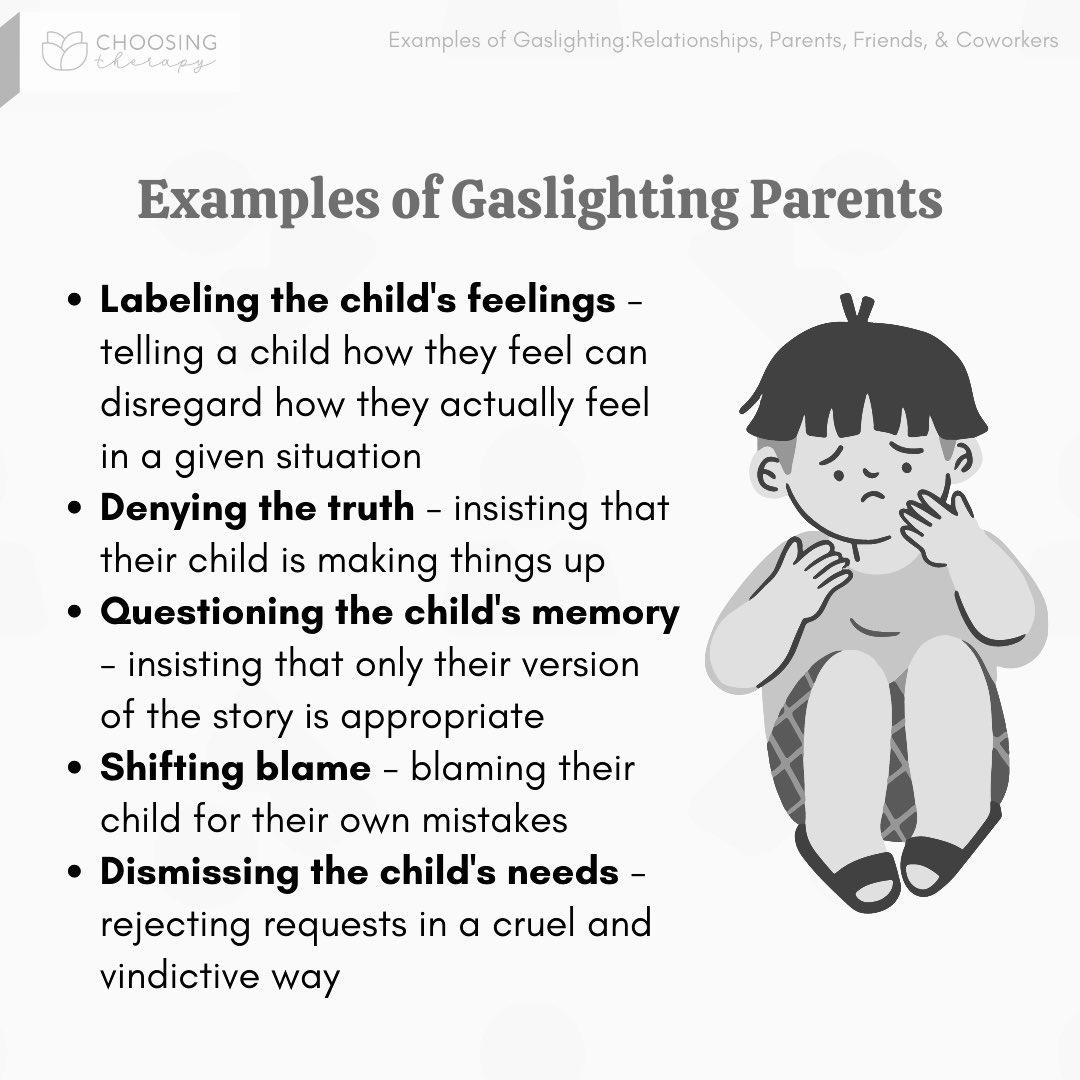
    Gaslighting by a parent often manifests in ways that are quietly invasive, slowly chipping away at a child’s sense of reality and self-worth. It might look like consistent dismissal of feelings, where your emotional experiences are met with phrases like “You’re overreacting” or “That never happened.” Another subtle sign is the rewriting of events to cast doubt on your memories, making you question what you truly saw or felt. Over time, these behaviors create an internal conflict that can lead to confusion, self-doubt, and an enduring sense of guilt, even in situations where you have done nothing wrong.

    Recognizing these patterns is crucial for emotional healing and reclaiming your voice. Look out for occasions when:

    • Your feelings are invalidated or belittled, especially during important emotional moments.
    • Contradictory stories make you question your own memory or judgment.
    • There is a persistent sense of walking on eggshells to avoid anger or disapproval.
    • You feel isolated as if your experience is uniquely misunderstood or dismissed.

    Understanding these indicators helps break the long-term emotional chains and opens the path towards self-compassion and empowerment.

    Rebuilding Trust in Your Own Memories and Perceptions

    One of the most profound challenges after experiencing parental gaslighting is the erosion of your confidence in your own reality. It’s common to second-guess your memories and doubt your feelings as if they’re unreliable or distorted. To reclaim your sense of truth, start by gently validating your experiences without the pressure to explain or justify them. Journaling can be a valuable tool here—write down your memories and feelings as purely as you remember them, without filtering or altering. Over time, this practice helps establish a personal record that becomes a reference point you can trust.

    Surrounding yourself with a supportive network is equally important. Share your experiences with trusted friends, therapists, or support groups who can offer external perspectives, affirm your reality, and help dismantle the internalized self-doubt that gaslighting fosters. Remember, rebuilding trust in your perceptions involves:

    • Listening to your intuition and honoring your feelings without dismissal
    • Documenting your experiences to create a consistent narrative of your truth
    • Recognizing distortions imposed by the gaslighter and consciously separating them from your own memories
    • Seeking validation through safe connections that foster genuine understanding and empathy

    Setting Boundaries and Communicating Your Needs Effectively

    Creating and maintaining clear limits is one of the most powerful tools in reclaiming your emotional well-being after experiencing parental gaslighting. It starts by identifying what behaviors or conversations make you feel invalidated or unsafe, then gently but firmly stating what you will no longer tolerate. Remember, establishing boundaries isn’t about punishing your parents—it’s about protecting your mind and heart. Be unapologetically honest about your needs, and allow yourself the grace to enforce those limits consistently, even if it feels uncomfortable at first.

    Effective communication goes hand in hand with setting boundaries. Approach these conversations with clarity and calmness. Using “I” statements can help keep the focus on your feelings without triggering defensiveness, for example:

    • “I feel hurt when my feelings are dismissed because it makes me doubt myself.”
    • “I need us to have conversations where my perspective is respected.”
    • “I’m asking for space when things become too overwhelming.”

    This approach reinforces your autonomy while encouraging empathy. Remember, healing is a process that involves both self-compassion and the courage to vocalize what you need for peace and growth.

    Seeking Support and Professional Help on Your Healing Journey

    Taking the courageous step to seek support is a vital part of reclaiming your truth and beginning the healing process. Whether you reach out to trusted friends, family members who understand, or online communities, finding people who validate your experiences can create a foundation of safety and empowerment. Remember, you don’t have to navigate this alone—connection fosters healing, and sharing your story can be a powerful antidote to isolation.

    Professional guidance can offer tailored tools to help dismantle the deep-rooted effects of parental gaslighting. Therapists trained in trauma and emotional abuse can assist you in identifying unhealthy patterns, setting firm boundaries, and rebuilding your self-esteem with compassion. Consider exploring options such as:

    • Individual therapy focused on trauma recovery and cognitive behavioral techniques
    • Support groups where shared experiences provide validation and hope
    • Educational workshops that teach coping strategies and emotional resilience

    By embracing support professionally and socially, you empower yourself to redefine your narrative and cultivate a future free from manipulation.

    In Conclusion

    Healing from parental gaslighting is a deeply personal journey—one that requires kindness, patience, and unwavering self-compassion. Recognizing the patterns and effects of this form of emotional manipulation is the first courageous step toward reclaiming your truth and rebuilding your sense of self. Remember, you are not alone, and your feelings are valid. Surround yourself with supportive people, seek professional guidance if needed, and give yourself permission to heal at your own pace. With time and gentle care, it’s possible to move beyond the shadows of gaslighting and embrace a future rooted in clarity, confidence, and peace.

    Share. Facebook Twitter Pinterest WhatsApp
    Previous ArticleBreaking the Loop: Understanding Circular Talks with Narcissists
    Next Article How Narcissistic Friends Quietly Undermine Your Success

    Related Posts

    Parents & Family

    Breaking Free: Healing from Narcissistic Parental Control

    Parents & Family

    Healing the Hidden Wounds of Narcissistic Family Neglect

    Parents & Family

    Healing from Narcissistic Parents: Navigating Adult Love

    Parents & Family

    Gaslighting from a Parent: Recognize It and Begin Healing

    Leave A Reply Cancel Reply

    Stay In Touch
    • Facebook
    • Twitter
    • Instagram
    • Pinterest

    Subscribe to Updates

    Get The Latest News, Updates, And Amazing Offers

    Top Posts
    Friendships

    Love-Bombing in Friendships: When Closeness Moves Too Fast

    Dating

    How to Express Your Needs Clearly Without Feeling Afraid

    Parents & Family

    The Golden Child & Scapegoat: Navigating Narcissistic Families

    Friendships

    How to Spot if Your Friend Is a Narcissist: Friendly Guide

    Parents & Family

    Understanding the Golden Child and Scapegoat in Narcissistic Families

    About

    The word “narc” is short for narcissist — someone who often puts themselves first, shows little empathy, and can be controlling or emotionally hurtful. Some people like this may have Narcissistic Personality Disorder (NPD), while others just show strong narcissistic behavior.

    KnowYourNarc.com is here to help you recognize this kind of behavior. Whether you’ve been in a relationship with a narcissist, are trying to understand someone in your life, or want to support someone else, this website gives you clear information, support, and tools to protect yourself and heal.

    Subscribe to Updates

    Get The Latest News, Updates, And Amazing Offers

    Our Picks
    Parents & Family June 19, 2025

    When Admiration Hurts: The Impact of Narcissistic Parents

    Dating May 24, 2025

    Crafting a Dating Plan That Supports Your Healing Journey

    Covert Narcissism June 19, 2025

    Why Covert Narcissists Excel at Gaslighting You

    KnowYourNarc
    Facebook X (Twitter) Instagram Pinterest
    • Home
    • About Us
    • Contact us
    • Privacy Policy
    • Terms & Conditions
    © 2026 KnowYourNarc.

    Type above and press Enter to search. Press Esc to cancel.